


Description
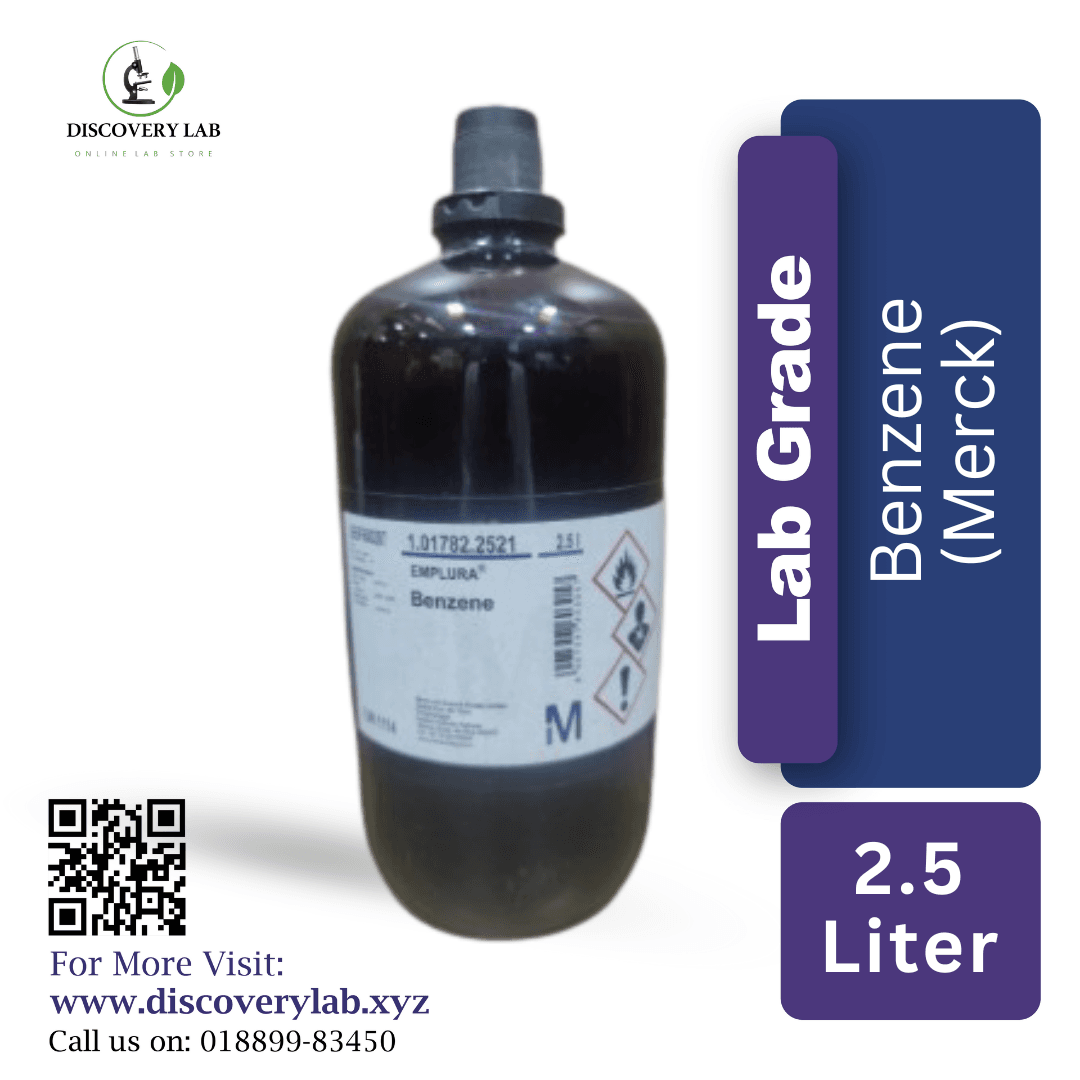
Benzene Lab Grade
Key Points
- Purity: Lab-grade benzene typically has a high purity level, often 99% or higher.
- Volatility: Benzene is a volatile solvent with a relatively low boiling point (80.1°C), making it useful for applications requiring rapid evaporation.
- Chemical Properties: Benzene is a non-polar solvent known for its aromatic ring structure, which makes it highly effective at dissolving other non-polar substances.
- Storage Conditions: Typically stored in tightly sealed containers to prevent evaporation and contamination, in a cool, dry place, away from direct sunlight and heat sources, and in a well-ventilated area.
Uses of Benzene in Laboratories (Key Points)
- Solvent: Benzene is used as a solvent in the laboratory for dissolving fats, resins, waxes, and various organic compounds.
- Reagent: Used as a reagent in chemical reactions, especially in organic synthesis, due to its stability and reactivity.
- Extraction: Employed in the extraction of various chemical compounds from mixtures due to its excellent solvency properties.
- Chromatography: Utilized as a mobile phase in chromatography techniques for the separation and analysis of compounds.
- Research: Important in research involving aromatic hydrocarbons and their derivatives, as well as in studying reaction mechanisms.
- Spectroscopy: Used in spectroscopy for preparing samples and as a reference standard in certain analytical procedures.
Precautions When Using Benzene in Laboratories
- Toxicity: Benzene is highly toxic and carcinogenic. Avoid inhalation, ingestion, and skin contact. Use appropriate PPE, such as gloves, goggles, and lab coats.
- Proper Ventilation: Ensure adequate ventilation when using benzene to prevent the accumulation of vapors, which can cause serious health effects.
- Flammability: Benzene is highly flammable. Keep it away from open flames, sparks, and heat sources. Store in flame-proof cabinets.
- Spill Management: Be prepared to manage spills with appropriate spill kits and materials (such as absorbent pads). Clean up spills immediately to prevent exposure.
- Labeling and Storage: Clearly label containers with the contents and hazards. Store benzene in tightly sealed containers in a cool, dry, well-ventilated area, away from incompatible substances such as strong oxidizers.
- Disposal: Dispose of benzene waste according to local regulations and guidelines. Do not pour it down the drain; use designated hazardous waste disposal methods.


Reviews
There are no reviews yet.